Featured
Table of Contents
AI requires human beings to determine whether or not the details it generates is accurate, and correct errors as they occur. Look for consumer feedbackIn addition to revealing using AI, business require to supply channels for client feedback to fix inaccuracies or express discomfort from AI interactions. This will assist marketers deliver an experience clients will find credible and valuable.
"This will assist online marketers comprehend their abilities and limitations, make online marketers more comfy and proficient at incorporating AI into their workflows, and remain updated on patterns and advancement," she states. "Watch on how AI is affecting different roles and jobs and proactively develop your competence." Get begun with the following steps: Get acquainted with the core ideas of AI and device knowing Deal with projects that utilize data analysis and AI applications Find out how to utilize AI tools for content strategy and search engine optimization Show your AI proficiency by showcasing jobs To better target marketing efforts, enhance customer engagement and conversion rates, experts need to be AI literate.
Professionals can gain a competitive advantage by mastering predictive analytics, generative AI, and marketing automation. Additionally, it is essential to remain up to date with the newest advancements by reskilling, making sure increased profession longevity. Targeting: Find out how to take advantage of AI to enhance customer engagements and conversion rates Data-driven insights: Comprehend how AI systems use data so you can identify AI predisposition and solve it Automation: Streamline processes so you can concentrate on method, leading to increased performance and performance Generative AI: Discover how to discover innovative solutions and methodologies for information analysis and consumer engagement Principles: Understand issues regarding privacy and bias; vital for responsible marketing practice Professional and Executive Advancement uses programs to assist professionals establish AI skills.
Navigating the Competitive Landscape with Search IntelligenceThe 2024 State of AI in Marketing: Secret Insights and Future Trends report paints an image of a marketing industry in shift. While AI adoption is speeding up, it discovers a significant gap in between specific interest for AI and organizational preparedness. To bridge the space, organizations will require to purchase informing their workforce, developing policies and standards, and producing a roadmap for implementation.
Navigating New Ranking Signals of Future Market
Organizations that equip their marketing leaders with abilities in AI technology will get a substantial competitive edge over the competition. The two-day Changing Techniques with Generative AI Expert & Executive Development program will prepare experts to lead AI-driven marketing efforts, leveraging cutting-edge AI tools such as hyper-personalization, predictive insights, and material automation.
"Whether it's analytics, design, brand name method, imaginative direction or copywriting, this course will assist with any marketing job," Inge says. "Participants will understand the present landscape, understand what AI can and can not do efficiently, and after that find out to use AI tools to future evidence their careers." As synthetic intelligence changes the marketing industry, the value of AI abilities and proficiency will just grow, bringing success to those who master them.
If you're a material marketer, you're most likely feeling a mix of unpredictability and FOMO around the rise of generative AI. It's natural to feel overloaded and not sure of how to browse this new category. If you want to stay competitive and not fall behind as AI becomes more widespread in marketing, it's vital to establish a structure for tactically leveraging AI in your content method.
The key is to utilize AI to boost and enhance your content execution, not to replace the tactical thinking and perspective that only people can provide. In this post, we'll break down the difference between material technique and techniques, share specific usage cases and tools for leveraging AI in your material workflow, and provide a detailed guide for auditing your process to identify opportunities for AI integration.
Navigating the Competitive Landscape with Search IntelligenceBefore we dive into how to use AI, it is necessary to compare your content strategy and your content methods: Your sets out the mission, vision, and overarching strategy for your content. This consists of specifying your content lanes, publishing cadence, content types, target market, circulation channels, and success metrics. Your are the real execution of that method.
How Voice Assistant Technology Change Search Strategy
AI should be leveraged to improve and enhance your content tactics required for top-level material strategy. As advanced as language designs have actually become, they still can't duplicate the lived experiences, distinct point of view, and subject matter competence that you give the table. Creating a successful content technique can be a challenging job for online marketers, typically fraught with various obstacles.
Marketers are under consistent pressure to come up with new concepts, which can be psychologically stressful and detrimental gradually. Handbook SEO research is another substantial difficulty. Guaranteeing that material ranks well on online search engine needs extensive keyword research, trend analysis, and staying updated with algorithm modifications all of which consume valuable time and resources.
Mistakes in content, from accurate inaccuracies to grammatical mistakes, can damage a brand name's reputation. Regularly keeping premium output is a continuous struggle. Preserving a unified brand name voice throughout numerous platforms and channels is essential but tough. Inconsistent messaging can confuse the audience and water down the brand's identity, making it tougher to establish a strong market existence.
- needs elaborate coordination and adaptability. Each platform has its unique demands and audience behaviors, including layers of complexity to the method. Understanding these difficulties is the initial step towards overcoming them. With advancements in AI technologies, tools like RivalFlow and Grammarly are assisting marketers enhance their processes, reduce burnout, improve accuracy, and keep consistency, ultimately resulting in more reliable and effective content methods.
Rather than spending hours combing through Google results, you can rapidly surface the information you need. If you deal with an internal material group or external freelancers, you understand how time-consuming it can be to produce detailed content briefs and describes. With AI, you can produce those briefs and lays out based upon your existing process, guaranteeing consistency no matter who is writing.
Why Mobile Discovery Is Essential for Local Growth
Among the most effective applications of AI is using it to produce first drafts of material that are instilled with your unique perspective and voice. Instead of having the AI pull from its existing understanding base, you can provide your own "training data" in the form of records or recordings.
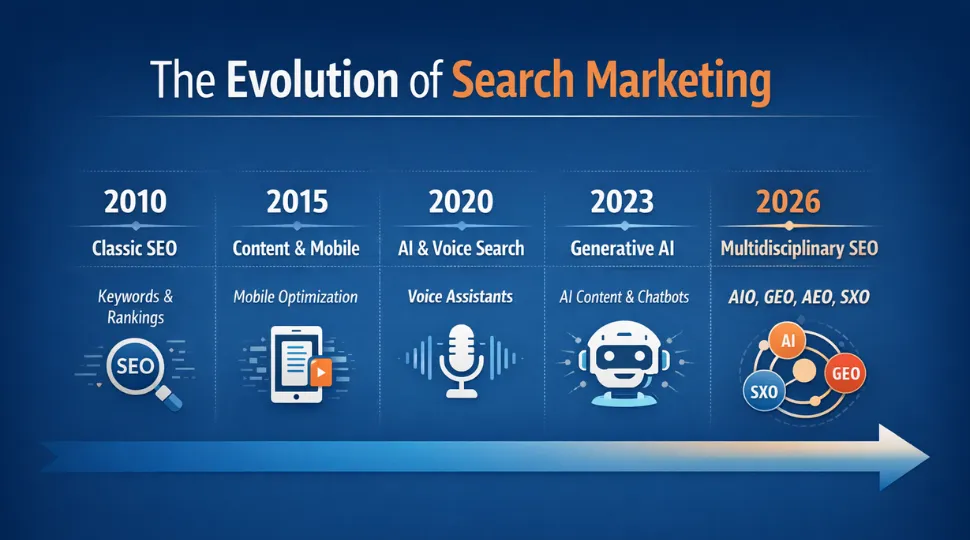
This allows you to effectively move your subject proficiency into the AI's outputs. You can also utilize AI to enhance your editing process. Tools can be trained on your business's style guide and set to check for grammar, tone consistency, SEO best practices, and more. AI does not simply help in preparing and editing; it also significantly reduces preparation time and help in overall organization material creation.
AI tools can uncover suggested keywords and optimization strategies to ensure your material ranks high in search results. Evaluation existing material to guarantee consistency and readability across channels, protecting your brand's identity. AI can look into helpful audience insights and material marketing efficiency, providing important techniques, topic ideas, and SEO opportunities that might have been overlooked by human writers.

Latest Posts
Building High-Growth Enterprise Models to Convert
Building the Future-Proof 2026 Growth Framework
Top Practices for Optimizing Front-End Performance in 2026